Bees are insects closely associated with flowers, although their lives are more varied than the familiar image of a large colony in a hive. Many species live alone or in small associations rather than in the social organisation seen in honey bees. Their size, appearance, nesting behaviour, and preferred plants differ. This variety is important when considering how bees use gardens, grasslands, woodlands, and other environments.
Flowers provide pollen and nectar that many bees collect or consume. During visits, pollen can move between flowers and contribute to pollination. The details of this relationship depend on the structure of the flower and the behaviour of the bee. Some visits transfer more pollen than others. It is therefore useful to consider what the insect actually does on a flower rather than assuming that every brief landing has the same effect.
The requirements for nesting vary among species. Some use holes in the ground, while others occupy cavities or make use of suitable plant material. A nest may be difficult to notice even in a place where adult bees are frequently seen. Food plants and nesting spaces are separate resources, and both can influence which kinds of bees use an area. A tidy-looking surface is not always the most informative guide to what is present.
Social bees show forms of cooperation that can include shared nesting, food collection, and care of young. Solitary species arrange these activities differently. Comparing these ways of life prevents one well-known example from standing in for the whole group. It also helps explain why changes to a landscape can affect different bee species in different ways, even when they visit some of the same flowers.
Observation can focus on the timing of visits, the kinds of flowers used, and the movement between feeding and nesting areas. A small patch of flowers may attract several insects that look similar at first glance. Differences in shape and behaviour become clearer with repeated, undisturbed watching. Bees illustrate how the details of individual species contribute to a wider network of relationships between plants and the animals that visit them.
Probiv test publication.
Probiv test publication.
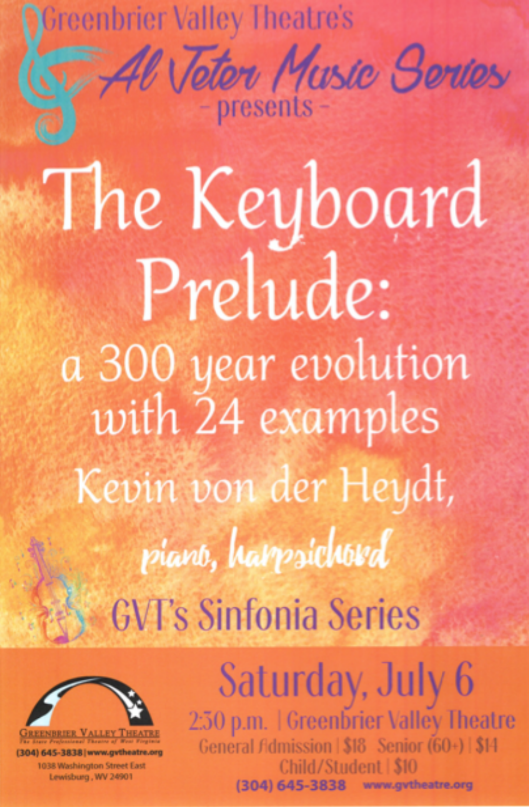
The Keyboard Prelude
concert & commentary by
Kevin von der Heydt
piano
July 6th, 2019 at 2:30 pm
Greenbrier Valley Theatre in Lewisburg, WV
Download: Concert Program
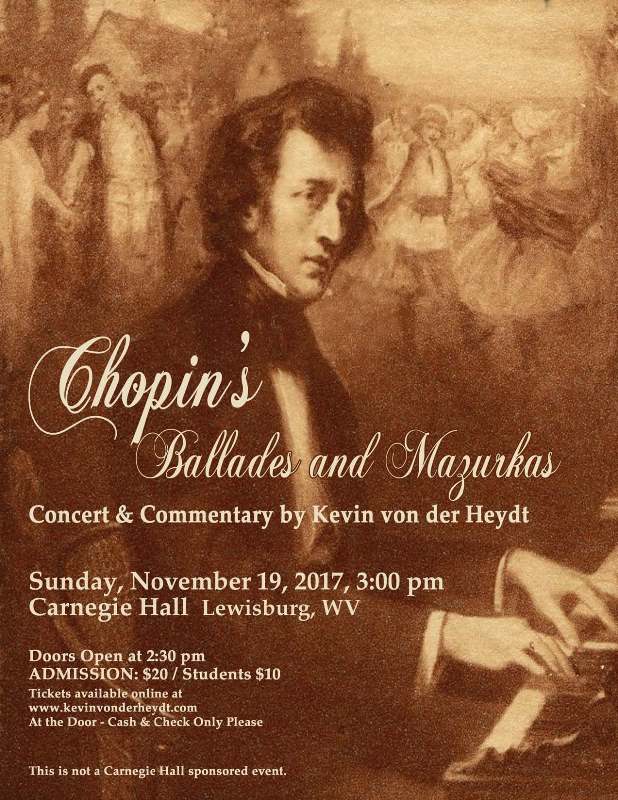
Chopin’s Ballades and Mazurkas
concert & commentary by
Kevin von der Heydt
piano
November 19th, 2017 at 3:00 pm
Carnegie Hall in Lewisburg, WV
Download: Concert Program
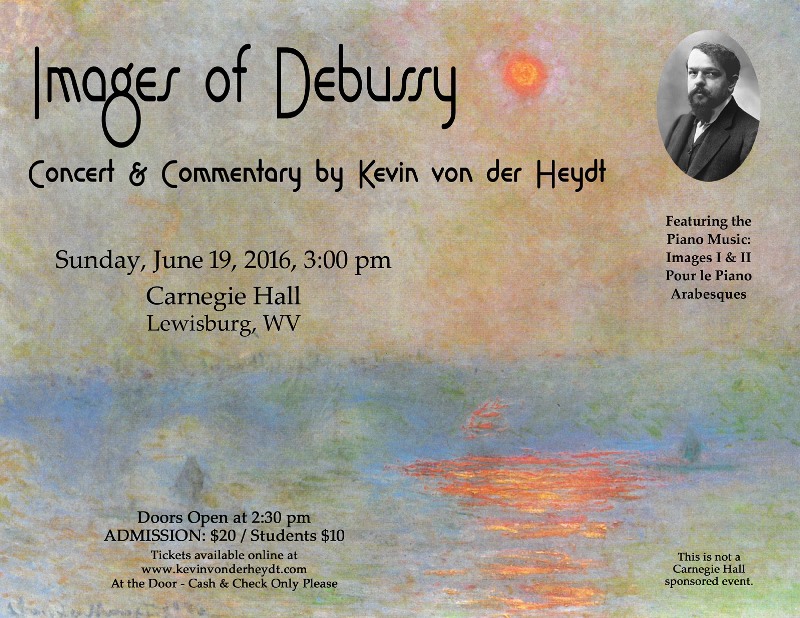
Images of Debussy
concert & commentary by
Kevin von der Heydt
piano
June 19th, 2016 at 3:00 pm
Carnegie Hall in Lewisburg, WV
Download: Concert Program
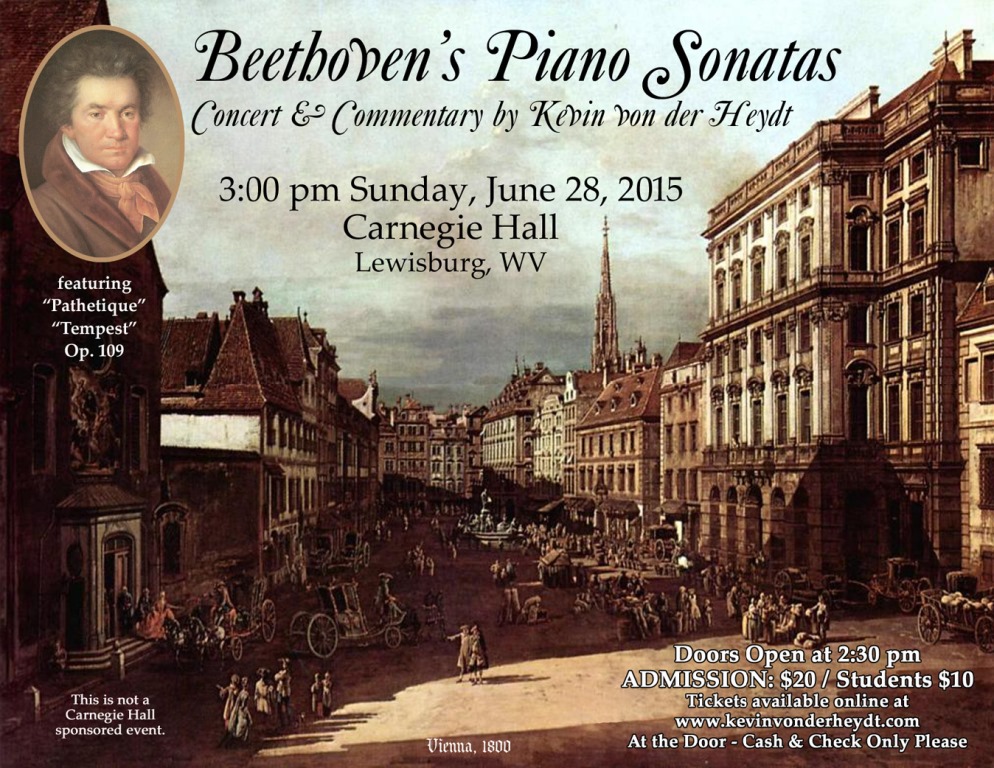
Ludwig van Beethoven (1770 – 1827)
Piano Sonatas
concert & commentary by
Kevin von der Heydt
piano
Introduction by Dr. James Caplinger
Grande Sonate Pathétique in c minor, Op. 13
Sonata in d minor, Op. 31, no. 2 “Tempest”
~ Intermission ~
The “Kurfűrsten” Sonatas, Wo047
Sonata in E Major, Op. 109
June 28th, 2015 at 3:00 pm
Carnegie Hall in Lewisburg, WV
Download: Concert Program
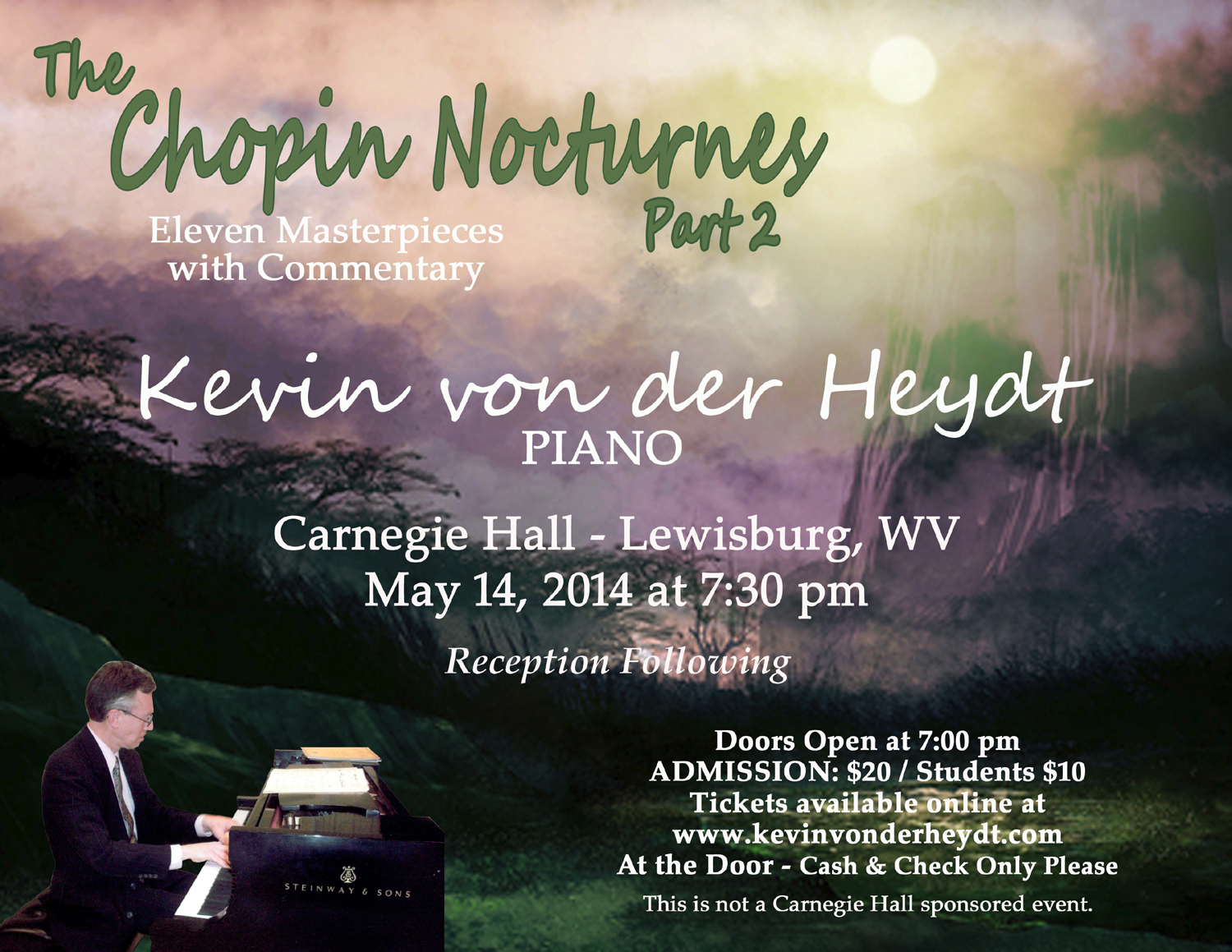
Frederic Chopin (1810 – 1849)
The Nocturnes, Part 2
eleven masterpieces with commentary by
Kevin von der Heydt
piano
Introduction by Dr. James Caplinger
Nocturne in E-flat major Op. 9, no. 2
Nocturne in B major Op. 9, no. 3
Nocturne in F-sharp major Op. 15, no.2
Nocturne in g minor Op. 15, no. 3
Nocturne in A-flat major Op. 32, no. 2
Nocturne in D-flat major Op. 27, no. 2
~ Intermission ~
Nocturne in f-sharp minor Op. 48, no. 2
Nocturne in G major Op. 37, no. 2
Nocturne in E-flat major Op. 55, no. 2
Nocturne in c minor
Nocturne in E major Op. 62, no. 2
May 14th, 2014 at 7:30 pm
Carnegie Hall in Lewisburg, WV
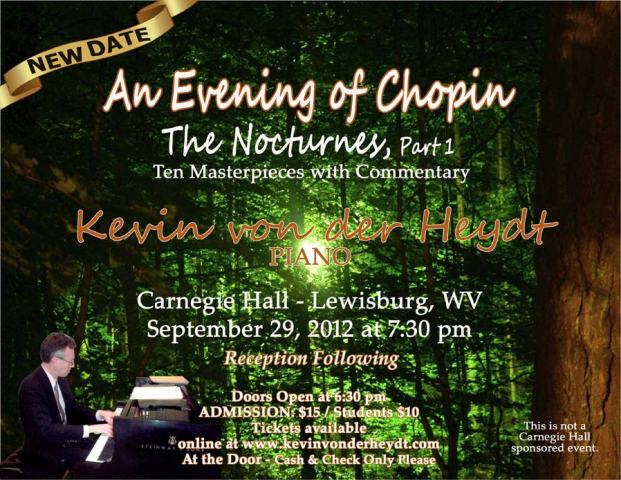
Frederic Chopin (1810 – 1849)
The Nocturnes, Part 1
with commentary by
Kevin von der Heydt
piano
Introduction by Dr. James Caplinger
Nocturne in e minor Op. 72, no. 1
Lento con gran espressione
[Nocturne in c# minor]
Nocturne in b-flat minor Op. 9, no. 1
Nocturne in F major Op. 15, no. 1
Nocturne in B major, Op. 32, no. 1
Nocturne in c# minor Op. 27, no. 1
~ Intermission ~
Nocturne in B-flat major by John Field
Nocturne in g minor, Op. 37, no. 1
Nocturne in c minor, Op. 48, no. 1
Nocturne in f minor, Op. 55, no. 1
Nocturne in B major, Op. 62, no. 1
September 29th, 2012, 7:30 pm
Carnegie Hall, Lewisburg, WV
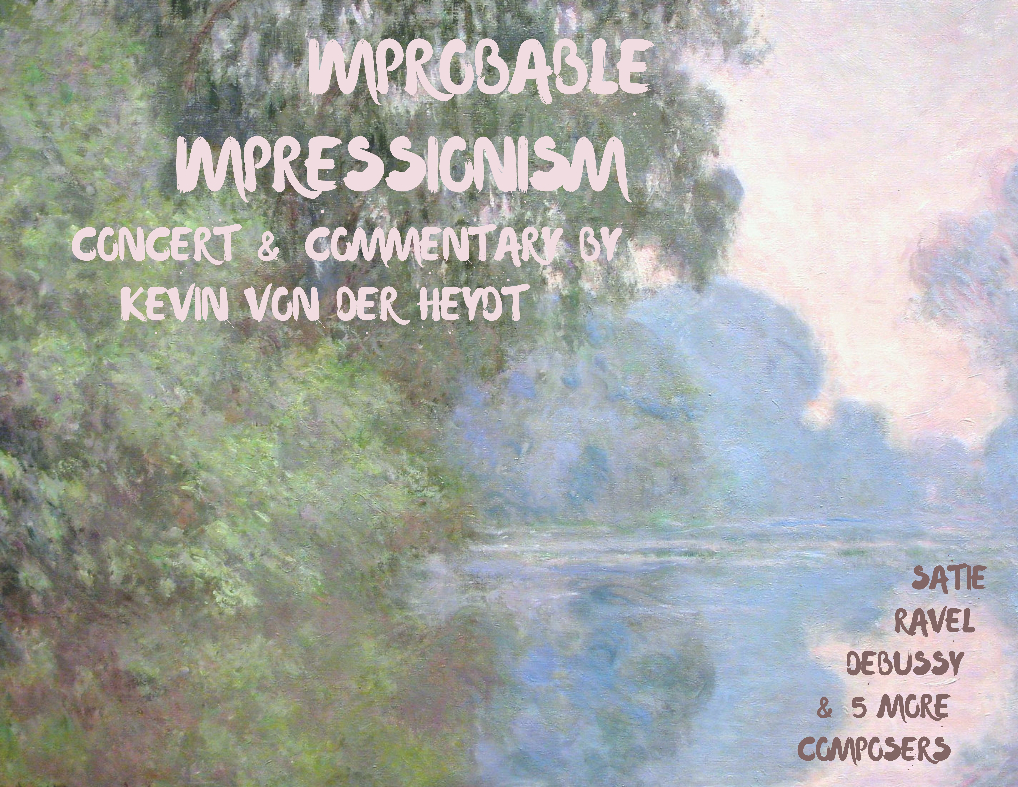
Improbable Impressionism
concert & commentary by
Kevin von der Heydt
piano
Download: Concert Program